
Food Tech has had better times, at least in terms of investment. But the underlying factors nurturing food innovation are here to stay, and are creating tailwinds for new trends.
Before we dive deeper into 10 of these trends, let’s start with the bad news: 2023 was a rough year for food technology startups seeking to raise venture capital. According to data from research firm PitchBook, fewer managed to do so than in 2021 and 2022. And those who did collectively attracted significantly less funding than in 2021, but also than in years prior to the pandemic.
Startups overall have been caught off guard by the end of zero-interest-rate times. Food tech is no exception, but this sector is even more strongly affected by inflation. How can consumers demand innovation when price tags are such a pressing concern?
This contradiction is only apparent. Sure, budget-concerned households are less likely to splurge on premium food delivery, for instance. But food tech can also bring alternatives to ingredients whose prices have become too expensive or volatile.
Avoiding waste is another way in which food tech can align with the new flavor of consumer demand — and it is much more than about good household management.
Concerns around environmental impact, animal welfare and health risks have converged to create opportunities for startups working on changing how we buy, cook, drink, eat and recycle. With a caveat: there are things that consumers aren’t prepared to sacrifice, even for the sake of the planet.
Taste is high on the list; it may go without saying, but it is still a huge challenge for startups looking to replace beloved kitchen staples. As for companies hoping to change our cooking habits, they have to remember that it can’t come at the price of convenience, although it no longer warrants a premium.
Investors aren’t immune to contradictory impulses, either. They want innovation and profitability; or at least, a clear path in that latter direction. This represents a challenge for companies looking to bring something new to the market, but luckily for them, there’s more capital than venture capital.
Government funding, in particular, is becoming available to food tech companies whose roadmaps meet a broader need to create more sustainable food production systems. That’s true in the UK, but also in Canada and the European Union.
It would also be wrong to think that VCs have given up on food tech. Maybe some generalist firms did, but many others are still ready to place bets, either because it overlaps with other areas such as deeptech and climate tech, or because they specialize in food tech.
There’s no apparent slowdown on that front. Eatable Adventures, Joyful Ventures, Kost Capital and Supply Change Capital are some firms that recently raised funds to invest into food tech, joining a global group that also includes Bluestein Ventures, FoodLabs and many others.
We can’t tell where food tech VCs will invest, but we have identified 10 trends that best reflect how food tech startups could meet consumer priorities in 2024 and beyond:
- Alternative proteins
- Alternative everything
- Consumer empowerment
- Sugar reduction
- Cooking innovation
- Non-alcoholic beverages
- Food as medicine
- Meal kits
- Greener packaging
- Fighting food waste
Some of these may already have peaked, but that’s interesting, too. It could translate into acquisitions from the food and beverage industry, and as we’ll see, it already has. But without further ado, let’s dive in.
Alternative proteins
Alternative proteins, or alt-proteins, are often top of mind when we think of consumer-facing food tech. With the anticipation of rising demand for meat alternatives, it is also in this category that startups have gained the most visibility.
Some of these, such as Impossible Foods, are already well beyond the startup stage; in 2019, U.S. plant-based meat replacement manufacturer Beyond Meat became the first company in its space to go public on the Nasdaq. This rise is also global, with brands such as HappyVore, Heura and Violife showing up on European supermarket shelves.
However, this segment is still struggling to attract more customers beyond early adopters, and investors have taken notice. Fundraising has been in sharp decline over the past two years, PitchBook recently reported.
What seems more likely is that more innovation is needed so that taste and cost discrepancy are less of a challenge. Research on cultivated meat and precision fermentation, for instance, is well underway. There’s government funding at stake: In December, the EU announced it would invest €50 million in helping scale up alt-proteins production.
In addition, startups are thinking beyond chicken and beef, with Denmark’s FÆRM coming up with dairy-free cheese, France’s Gourmey, with cultivated foie gras, and Israel’s Oshi, with plant-based salmon filets — not to mention several companies developing egg alternatives.
Alternative everything
It’s not just the alt-proteins space that is diversifying beyond meat. Companies are also developing replacements for other ingredients, for various reasons that reflect both customer demand and market trends.
One group of startups uses precision fermentation to offer an alternative to palm oil, amid rising scrutiny due to a mix of environmental and health concerns. As “no palm oil” labels become a common sight on packaging, teams are rushing to supply food manufacturers with other options.
C16 Biosciences, for example, encourages its clients to “Go Palmless.” With approximately €31.25 million in funding to date from the Bill & Melinda Gates Foundation and others, it cites consumer and regulator pushback, but also supply and price volatility amid the reasons why alternatives are needed.
Similarly, demand for a sustainable alternative to cocoa is driven by concerns about its climate impact, but also correlated supply and pricing woes, as environmental threats put pressure on producers.
This led Munich-based company Planet A Foods to create cocoa-free chocolate ingredient ChoViva, which it hopes to sell to more manufacturers internationally thanks to a $15.4 million Series A round of funding (€14.2 million). The startup is also looking to expand its approach to other plant-based ingredients, and there’s no doubt that other companies are working on other replacements, too.
Consumer empowerment through food tech
“No palm oil” and other labels only go so far. Enters Yuka: the French scanning app has become a phenomenon for health-conscious consumers to check before they buy.
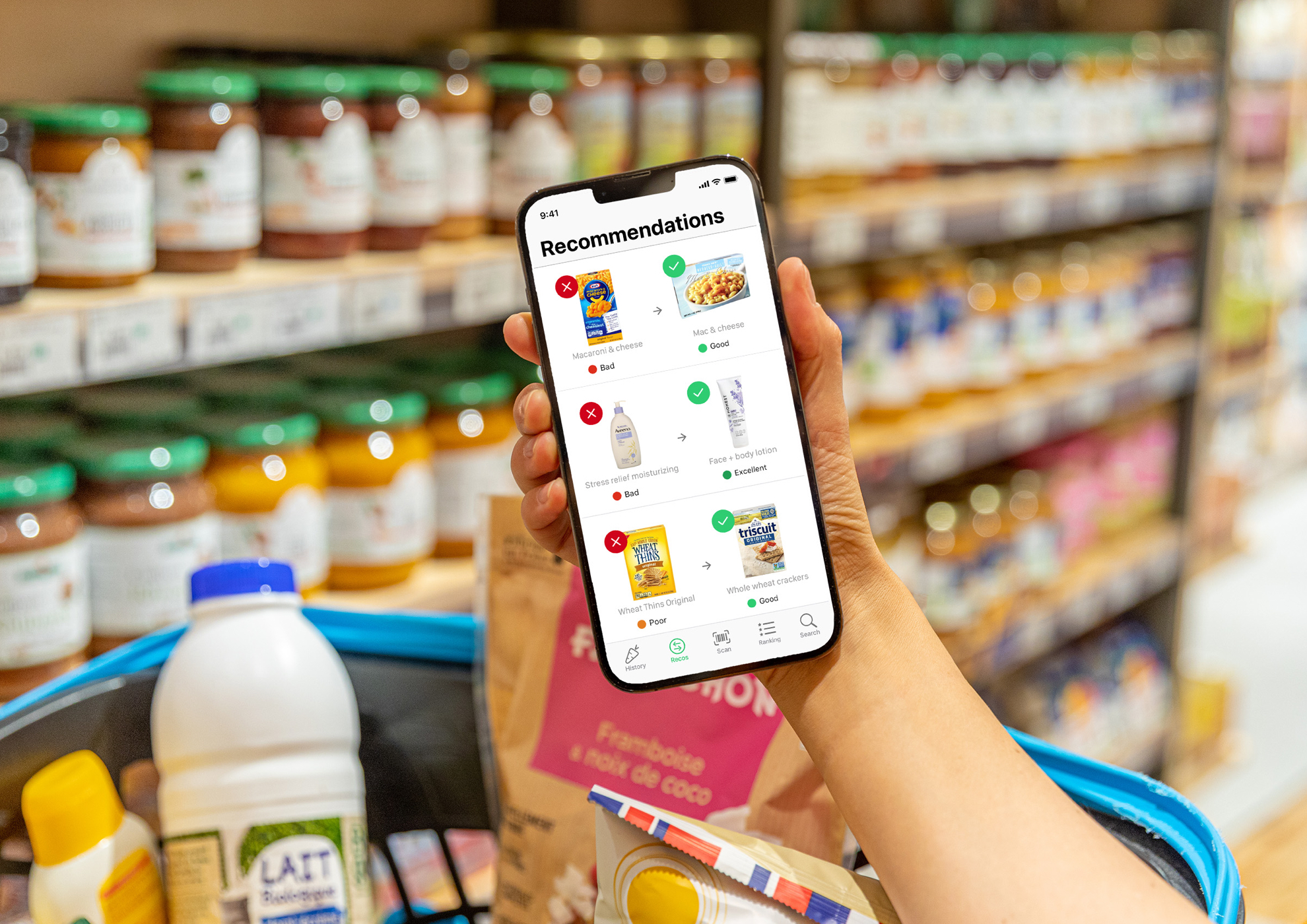
Yuka is a trend in itself; in France, it is now a common sight to see people use it in food stores. But it also has competitors and global counterparts, such as EWG’s Healthy Living app; Fig, which also flags allergens; the FoodSwitch app; and Fooducate, with a broader focus on cultivating healthy eating habits.
Before entering this space, however, companies may want to consider the headwinds they will face, some of them less expected than others. Yuka’s team, for instance, was upset to see IFOAM, a worldwide organization advocating for organics, take legal action against the app’s potentially misleading “Eco-score.” Then again, that’s another incentive for startups to up their game.
Sugar reduction
Sugar is one ingredient that consumers are often concerned about. This creates an opportunity for companies to come up with products that contain less sugar, but let’s face it: They won’t sell many if the taste is not sweet enough. Or worse, if they leave a bad aftertaste, as sweeteners often do.
That’s where a new group of startups come in, with innovations that hope to indulge our sweet tooth, only with less sugar. Their names may be less familiar to the general public, but there are quite a few of them working with the food industry behind the scenes.
Israeli startup Better Juice, for example, is partnering with Illinois-based Ingredion to fast-track its entry into the U.S. juice market. As others, it promises to deliver less sugar, but as much flavor. So does Incredo, also from Israel, and formerly known as DouxMatok.
A special mention goes to Zya, a British startup tackling the problem from a slightly different angle. It is developing enzymes — another growing trend — that can transform sugar into fiber in the gut.
Cooking innovation – food tech
Ingredients aside, many people are worried about the health implications of cooking methods such as deep frying. This played no small part in the air fryer craze: Thanks to clever marketing, these convection ovens have become a kitchen staple.
That ship may have already sailed, unless AI air fryers revive the hype. But either way, it shows that there is room for innovation in the cooking department.
At the Consumer Electronics Show (CES 2024) in Las Vegas in January, Dutch company Sevvy showcased its licensable technology to “prepare food without baking fats and use up to 50% less salt and sugar.” There was also Brisk It Grills and its smart barbecues, ColdSnap‘s ice cream machine and Bartesian‘s on-demand cocktail maker, the AP reported.

Non-alcoholic beverages
Will mocktails eventually replace cocktails? Drinking alcohol is a habit that consumers increasingly want to break or keep under check. Beverage companies know this and are adapting their offering, but startups are also carving out a space for themselves in the beverage aisle.
As new products keep popping up, the non-alcoholic beverage segment is increasingly diversified, from alcohol-free beer and wine brands to Liquid Death, the canned water company that is now valued at a whopping $1.4 billion (around €1.3 billion.)
Among newcomers, several say that their products do more, not less. This is an emerging category of products known as functional beverages, with marketing that touts the benefits of adaptogens, cannabidiol, nootropics or probiotics.
The sector is also ripe for acquisitions, following the footsteps of London-based Seedlip, which was bought by juggernaut Diageo in 2019 for an undisclosed amount.
Food as medicine
The rise of functional beverages reflects a broader trend that some startups are riding, and which can be summed up as “food as medicine.” Touted health benefits can vary, from short-term goals such as gut health, to long-term ones, namely longevity.
One interesting company in this space comes out of Sweden: Nick’s, which manufactures keto diet-friendly ice cream and snack bars. As many as 7 percent of Americans followed a keto diet in 2022, according to data from the International Food Information Council.
The adoption of anti-obesity drugs such as Ozempic and Wegovy for weight loss could be even more massive, with consequences on the food sector — and not all negative.
According to PitchBook senior analyst Alex Frederick, “there is an opportunity to create supplements and functional foods that cater to GLP-1 drug patients and help maintain muscle mass and healthy nutrition.”
Meal kits
Food delivery startups were likely overhyped, especially in terms of the volume of investment they attracted. But it arguably says more about delivery, its low margins and labor issues, than about food in itself.
On the consumer side, there is still an appetite for healthy meals that fit into busy lives. During the pandemic, this fueled demand for meal kits, where individuals get the rewards of homemade cooking without having to worry about recipes or buying groceries.
However, meal-kit companies now belong to a crowded category that delivered mixed results in 2023. But it would be too early to write them off. Experts predict that there will be winners and losers; to be among the former, startups will have to address concerns around value for money, as well as packaging waste.
Greener packaging
With customers increasingly critical of plastic use and with an eye on reducing both environmental impact and costs, food companies are keen to rethink their packaging, and startups are hoping to help.
Some of these teams have ties to biotech, with research and development on innovative materials derived from mushrooms, algae and other microorganisms.
For consumers, the end result is packaging that can be either biodegradable, less voluminous, edible, or all of these at the same time. London-based Notpla illustrates this trend, with eco-friendly packaging that’s not plastic — hence the name — and that could wrap up liquids, too.
Listen to the Selected podcast episode below with Notpla’s co-founder and co-CEO Pierre Paslier discussing the company’s journey and plans.
Food Tech is fighting food waste
Packaging waste is one thing; food waste is another, and a major issue: Around 10% of food made available to EU consumers may be wasted, according to Eurostat estimates.
The most high-profile company addressing this problem is Too Good To Go, which connects its community to supermarkets, shops, restaurants, and manufacturers with surplus food. Since its launch in 2016, the company says it has grown to over 78 million registered users and 140,000 active business partners across 17 countries.
Too Good To Go is not alone in its space; for instance, there’s also grocery deals app Flashfood in the U.S. And at the household level, a few indie apps promise to help users keep track of food expiration dates.
Too Good To Go is taking this idea to another level thanks to AI, which it is leveraging to help grocery retailers draw more margin from near-expired food and reduce food waste.
That Too Good To Go and its partners are embracing AI is a sign of more to come. Just like many other sectors, FoodTech can benefit from AI-enabled innovations that go beyond gimmicks and deliver real value to manufacturers and users. That may not be a massive trend yet, but it could soon become one, and we will definitely be tracking it.
Quick heads up: Sesamers is collaborating with SIAL Paris – the world’s largest food innovation exhibition – to support first-time startup exhibitors with making the most of this year’s event. More information is available here + feel free to contact sial@sesamers.com with any questions!